

My biggest Tesla fear and a easy analog fix
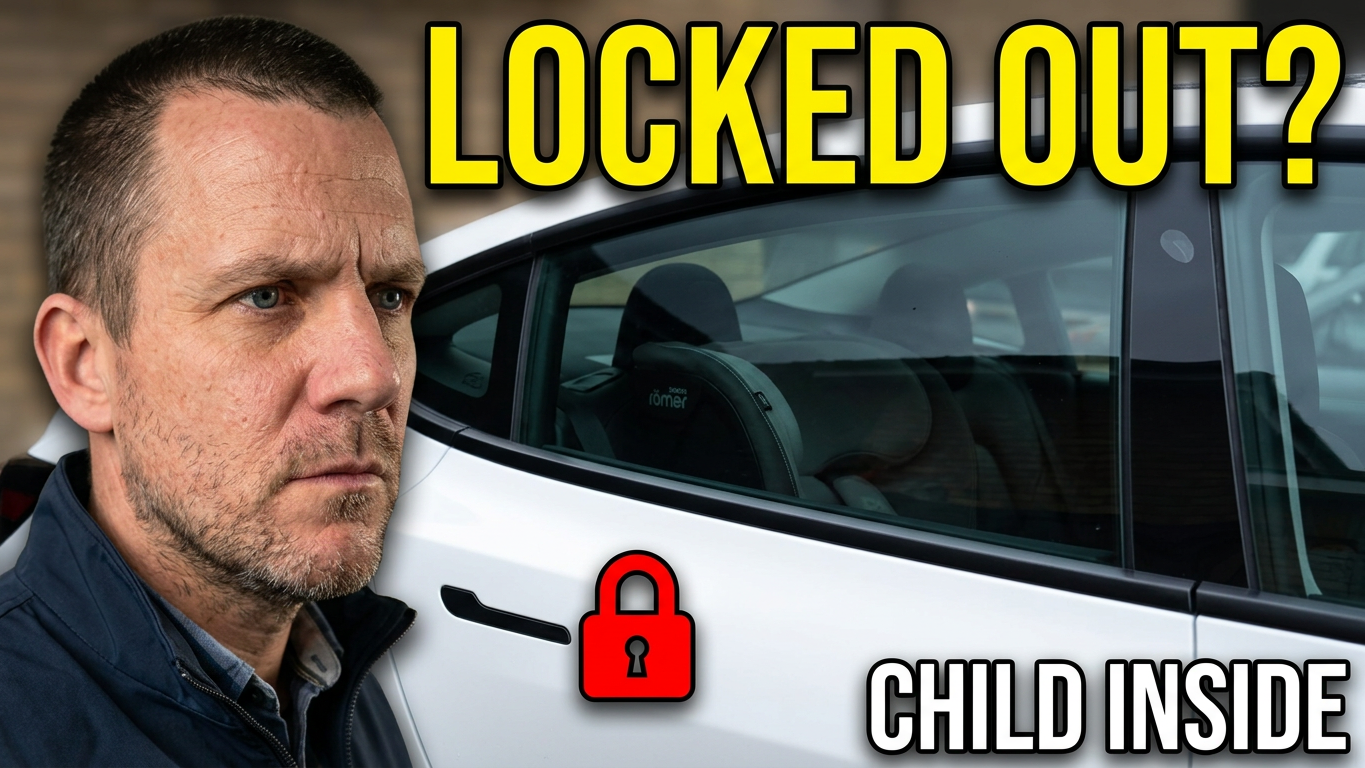
Did you know that my biggest Tesla fear is nothing like running out of battery or FSD gone wild? It’s actually my child stuck in the back not being able to get out of the car. Specifically because of Tesla’s auto locking software, which sometimes enables itself too early when I get out of the car to walk over to the other side. Don’t get me wrong, Tesla software is brilliant and even detects a child still in the car. But would you trust software written for that to work 100% of the time?
The Tesla doors cannot be opened from the outside if the 12V battery goes bad. I know it’s a very small chance but still. So if you’re also paranoid just like me, then I have a small and easy analog hack to deal with this. So that every time you don’t need to worry about Tesla auto locking feature. But you can still use it confidently, with or without your child sitting in the back of your car.
Why can Tesla doors be sometimes dangerous?
Tesla doors have faced significant public and regulatory scrutiny primarily due to their electronic latches combined with hidden or unintuition-based mechanical overrides.
While designed for aerodynamic efficiency, noise reduction, and a sleek look, the system poses severe risks during emergencies.
Primary Safety Hazards
- Reliance on Low-Voltage Power: The primary door handles inside and outside use electronic actuators rather than direct mechanical cables. In a severe crash or 12V power failure, the battery disconnects or low-voltage wiring severs, rendering the main door buttons completely unresponsive.
- Hidden Emergency Releases (Especially in the Rear):
- Front Seats: Equipped with a physical lever near the window switches, though first-time passengers often pull it accidentally or fail to locate it in a panic.
- Rear Seats: Manual overrides in models like the Model Y and Model 3 are hidden behind speaker grills, inside door-pocket rubber mats, or behind small trim panels that must be pried open to access a hidden pull cable. In dark, smoke-filled, or panic-inducing conditions, passengers—especially children—cannot realistically find or operate them.
- Exterior Rescue Obstacles: Exterior door handles are flush (Model 3/Y), motorized (Model S/X), or completely omitted (Cybertruck). When a vehicle loses power post-collision, first responders and bystanders cannot open the doors from the outside without prying the frame or breaking windows.
- Laminated Glass Hindrance: I have made a video about this how to escape from a Tesla and break the glass. Modern Tesla side windows frequently use double-pane acoustic laminated glass. This glass does not shatter easily like traditional tempered glass, making it much harder for occupants to break out or for rescuers to break in.
Feedback
What do you think, is this too much? Am I over exaggerating and being too paranoid? Write me in the comments and share your suggestions and experiences too. Please help grow my YouTube channel by subscribing or becoming a premium channel member, so I can test, review and compare new products. Please support my channel and use my Tesla promo code for a big discount on your new car or free supercharger Miles.