

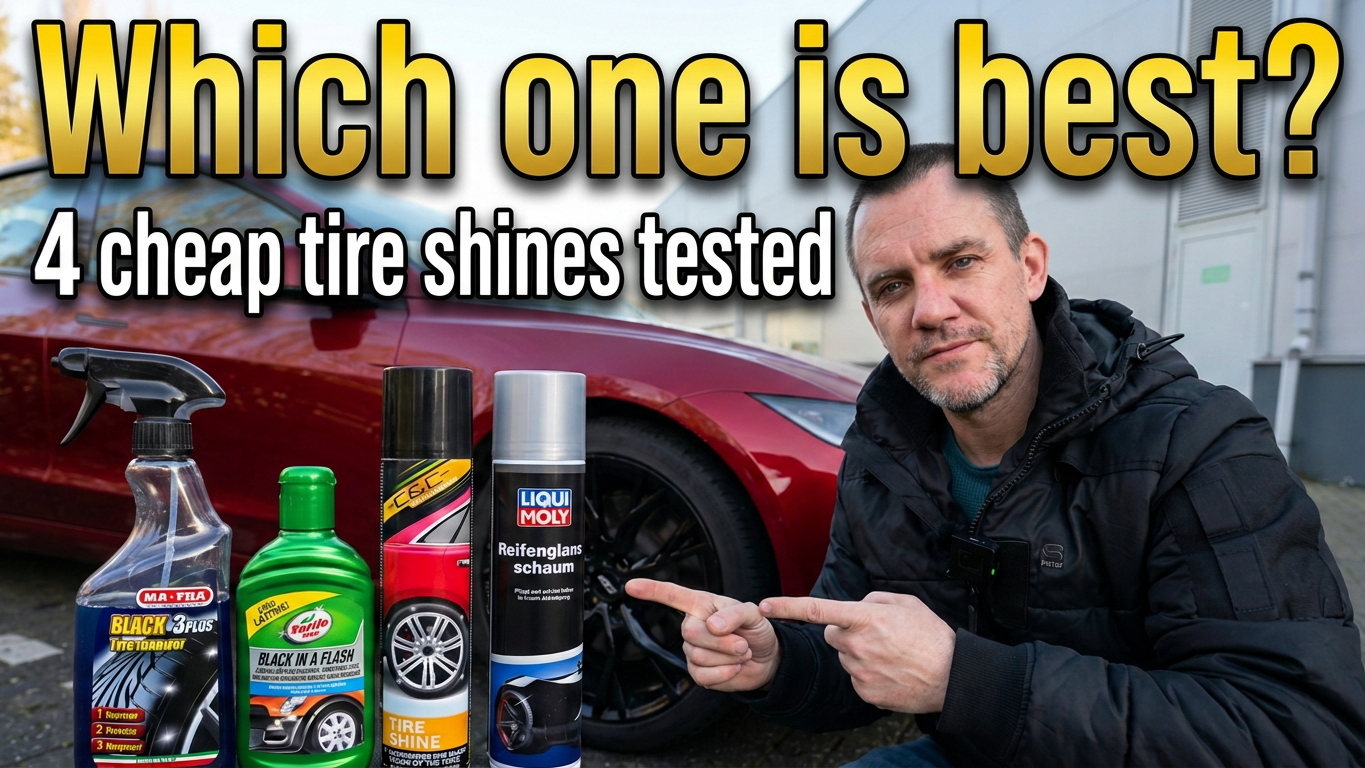
I tested 4 cheap tire shines from Ma-Fra, Turtle Wax, Liqui Moly and Action
Today I put 4 completely different types of tire shine to the test on my Tesla winter tires! All tire dressing products featured in the video are between 3-10 Euros and offer excellent value for their price. From a pump spray and a cream with an applicator pad, to a pressurized mist and an aerosol foam. I test application ease, finish, mess/overspray, and durability. Discover the secret benefits of applying tire shine on your winter tires that nobody talks about.
Amazon affiliate links to the products in this video
- Ma-Fra Black 3 Plus: https://link.amazon/B066RQdam
- Turtle Wax Black in a Flash: https://link.amazon/B08s9JLiL
- Liqui Moly Tyre Gloss Foam: https://link.amazon/B0fsPl3j8
- C&C Tire Shine (also in ACTION): https://link.amazon/B0b3VReXW
Benefits of using car tire shine on winter tyres
I used to think tire shine was purely a summer show-car thing—something you slap on before a sunny weekend drive and completely forget about once November rolls around. Honestly, I figured putting dressing on my tires in the winter was a total waste of time because the first slushy puddle or salted highway would wash it right off anyway.
After testing different setups through a few harsh, wet winters, I completely changed my mind. When I use the right kind of dressing, keeping my tires coated in the cold months actually gives me a few massive advantages that go way beyond just looking clean:
- It acts as a sacrificial barrier against road salt and grime. Winter roads are brutal, covered in de-icing salts, brine, and magnesium chloride. When I leave my sidewalls bare, that salty slush dries out the rubber and leaves behind a chalky brown film that is a pain to scrub off come spring. A good water-based or SiO2-infused dressing seals the pores of the rubber so the salt sits on top of the coating instead of baking into the tire.
- Cleanup during winter washes becomes effortless. Washing a car in freezing temperatures is miserable enough without having to spend twenty minutes aggressively scrubbing brown “blooming” off the sidewalls. Because I keep a layer of protection on them, a quick blast from my pressure washer or a light pass with a soapy mitt knocks all the winter road film right off.
- It prevents premature dry rot and cracking. Cold, dry winter air combined with harsh road chemicals strips away the natural anti-ozonants built into the rubber. By conditioning the sidewalls every few weeks, I keep the rubber supple and prevent that faded, brittle look from setting in before spring even arrives.
- It keeps my winter wheels from looking dreary. Even when the rest of my car gets covered in road spray two days after a wash, having deep, satin-black tires makes the whole vehicle look noticeably better maintained. I stay away from heavy, greasy solvent-based gels in the winter because they tend to sling grime onto the paint—instead, I stick to a dry-to-the-touch satin water-based dressing that repels water and stays put.
If you do start applying it in the winter, my biggest tip is to make sure the rubber is completely dry before you put the product on, and give it at least thirty minutes to cure before driving into wet slush. That little bit of prep makes all the difference in how long it lasts. If the winter tyres are very dirty you can use a cheap wheel and tire cleaner to remove the browning before applying tire shine.
Benefits of using car tire shine in hot summer weather
When temperatures climb and the sun beats down on my car for months on end, keeping a good coat of tire shine on my sidewalls pays off in ways that go way beyond aesthetics:
- It shields the rubber from brutal UV rays. Just like sunblock protects my skin, a quality tire dressing with UV inhibitors blocks harsh solar radiation from breaking down the rubber compounds. Without that barrier, summer sun rapidly oxidizes the sidewalls, turning them a chalky, faded gray and accelerating micro-cracking long before the tread is actually worn out.
- It keeps the sidewalls hydrated against extreme heat. Between scorching ambient air and the radiant heat coming off hot asphalt, summer temperatures literally bake the moisture and natural oils out of tires. By feeding the rubber with a conditioning, water-based dressing every couple of weeks, I keep the sidewalls flexible and prevent them from drying out and turning brittle.
- It stops “tire blooming” before it starts. Tires are manufactured with built-in anti-ozonants that slowly migrate to the surface to protect the rubber, and high summer heat speeds that process up dramatically. When that chemical reacts with UV light and ozone, it creates that ugly brown oxidation film. Keeping a fresh layer of dressing on the tire slows down that oxidation process and keeps the rubber looking rich and black instead of rusty brown.
- Dust and brake dust wipe right off. Dry, hot summer driving kicks up tons of fine road dust and aggressive brake dust, which loves to cling to raw, porous rubber. When I have a cured, dry-to-the-touch satin dressing on my tires, the surface is sealed and slick—so dust doesn’t embed itself into the sidewall, and my next wash takes half the effort.
Feedback
My advice is not to overcomplicate things and keep it simple when it comes to tire shine. The preparation does not always have to be perfect. Sometimes a tire is not completely clean and sometimes it is not completely dry either. What matters is using it on a regular basis especially when it matters the most. For example when the summer tires go in seasonal storage and come out after the winter. Or when you park your car for a longer period in the burning sun. Then it really matters. Keep it simple and create your own fast routine so you do it often and enjoy the process!
Subscribe so you don’t miss the follow up video in 2 weeks, where we check-in which tire shine product is still visible and performing on the car’s tires Please support my channel and use my Tesla promo code for a big discount on your new car or free supercharger Miles: https://ts.la/gerritjan419243 .