

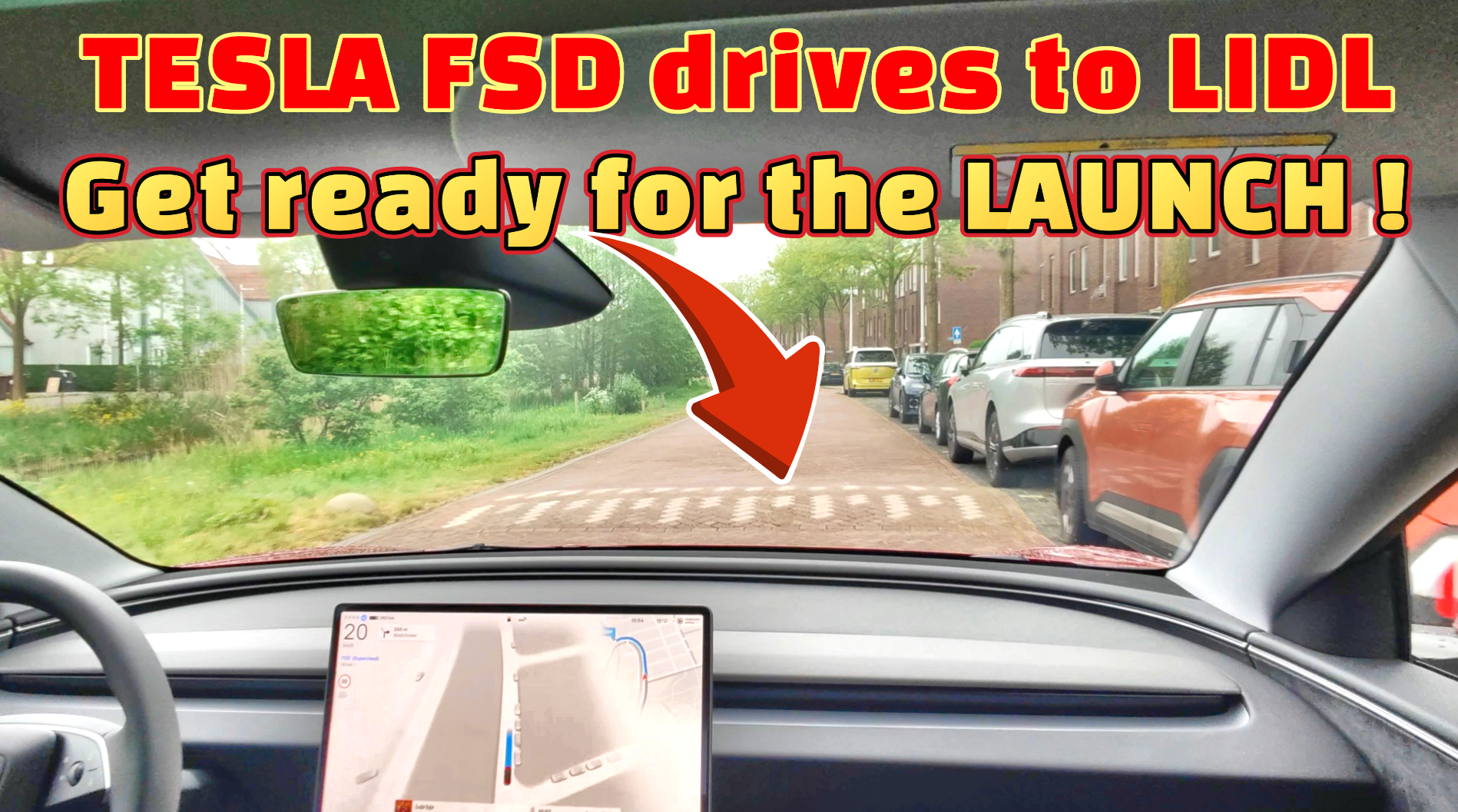
Tesla FSD Almost DESTROYS My Model 3 on Dutch Speed Bumps | POV Drive to Lidl
Tesla FSD Supervised takes me and my son for shopping to Lidl… and nearly destroys the bottom of my Model 3 Performance on high speed bumps here in The Netherlands, Europe. Check out my video below 😱 POV ride showing: • Extremely tight parking exit (Austin Powers vibes) • Narrow Dutch European streets • How FSD handles brutal speed bumps and potholes • Real scraping incident + damage check.
Is Tesla FSD good at avoiding potholes?
As of 2026, the short answer is: It’s getting better, but don’t trust it blindly.
Tesla’s Full Self-Driving (FSD) “Supervised” has evolved significantly with the shift to end-to-end neural networks (Version 12 and beyond). Unlike earlier versions that struggled to “see” depth in the road surface, the current system is much more aware of the 3D environment.
How It Works (and Why It Fails)
FSD treats the road as a occupancy network. It looks for “voxels” (3D pixels) that represent a change in the road height.
- Detection: The cameras are excellent at spotting high-contrast changes—like a dark hole on a light grey road. If the pothole is large enough to be seen as an “obstacle,” the car will often subtly shift its lane position to avoid it.
- The Shadow Problem: FSD can still be fooled by shadows or wet patches that look like holes but aren’t, causing “phantom swerving.” Conversely, a shallow pothole filled with water might look like a flat puddle to the cameras, leading the car to drive straight through it.
- European Constraints: In Europe, the software is more “pinned” by regulations. Because the car is required to stay more strictly centered in its lane, it may be less likely to perform a wide swerve to avoid a pothole compared to the more aggressive North American version.
The Reality Check
| Situation | FSD Performance |
| Large, Deep Potholes | Usually detected; the car will nudge to the side of the lane if there is space. |
| Small/Sharp Potholes | Often missed. The suspension will take the hit. |
| Heavy Traffic | The car is less likely to avoid a hole if swerving would bring it too close to a vehicle in the next lane. |
| Night/Rain | Accuracy drops significantly. Standing water hides the depth of the hole from the cameras. |
Why You Should Be Careful
Even if FSD “sees” the pothole, its primary programming is safety and lane-keeping. It will prioritize staying in the lane over saving your rims. If avoiding a pothole requires crossing a solid white line or getting too close to a cyclist, FSD will choose to hit the pothole every time.
My personal Tip for Tesla Owners:
If you see a pothole coming and you are on FSD, take over. Tesla’s “soft” paint might be one concern, but their large alloy wheels (especially the 20″ or 21″ Induction/Uberturbine wheels) are very prone to cracking or “curb rash” from deep road craters. FSD does not yet have a “rim protection mode.”
Is Tesla FSD good at slowing down for traffic bumps?
As of May 2026, the short answer is: It’s much better than it used to be, but it’s still not perfect.
With the transition to v12 (and the newer v13) “Supervised” FSD, Tesla moved to an end-to-end neural network. This means the car “sees” a speed bump and reacts to it based on millions of miles of human driving data, rather than just waiting for a line of code to tell it to slow down.
Here is how FSD currently handles traffic bumps:
1. Visual Detection vs. “Memory”
FSD no longer relies purely on GPS data or fleet maps to know a bump is coming.
- Visual Identification: The cameras identify the physical hump, the yellow/white “chevrons” painted on it, or the signs on the side of the road.
- Reaction: When it identifies a bump, the car typically slows down to between 15–22 km/h (9–14 mph).
- The “Human” Feel: Because it’s a neural net, the braking is usually smoother than previous versions, which used to “slam” the brakes at the last second.
2. Where it Struggles
While it has improved, there are still specific scenarios where it might fail to slow down sufficiently:
- Unmarked Bumps: In some European residential areas, “speed tables” are the same color as the asphalt and lack paint. FSD occasionally misses these and may hit them at the full speed limit.
- Low Light/Rain: Heavy rain or glare can hide the texture of a bump, leading the car to react late.
- “Speed Cushions”: Those small square humps in the middle of the lane can confuse the system. Humans often straddle them; FSD sometimes tries to center the car perfectly, which can lead to a jarring hit on one or both wheels.
3. European Specifics
In Europe, speed bumps (or “sleeping policemen”) vary wildly in design compared to the standard US “speed hump.”
- Strict Regulations: Because the European version of FSD is more conservative due to UNECE regulations, it often slows down more than necessary, which can sometimes annoy drivers behind you.
- Roundabout Entry Bumps: Tesla is still fine-tuning the logic for bumps located immediately before roundabouts, where the car is trying to calculate yield logic and speed reduction simultaneously.
4. The “Comfort” Factor
Even if FSD slows down, the suspension plays a huge role. If you are driving a Model 3 or Model Y with the older, stiffer suspension (pre-2023), even FSD’s “correct” speed might feel rough. Owners with the “Highland” Model 3 or the updated Model Y find that FSD handles bumps much more gracefully because the hardware can absorb the impact better.
My personal Tip: If you see a particularly aggressive or stealthy speed bump ahead, it is still recommended to manually scroll the right thumbwheel down to lower your max speed. This ensures the car approaches with caution without you having to disengage the system entirely.
Feedback
Do you also drive Tesla FSD in Europe and what are your experiences with speed bumps and potholes? Please help grow my YouTube channel by subscribing or becoming a premium channel member, so I can test, review and compare new products. Please support my channel and use my Tesla promo code for a big discount on your new car or free supercharger Miles.