

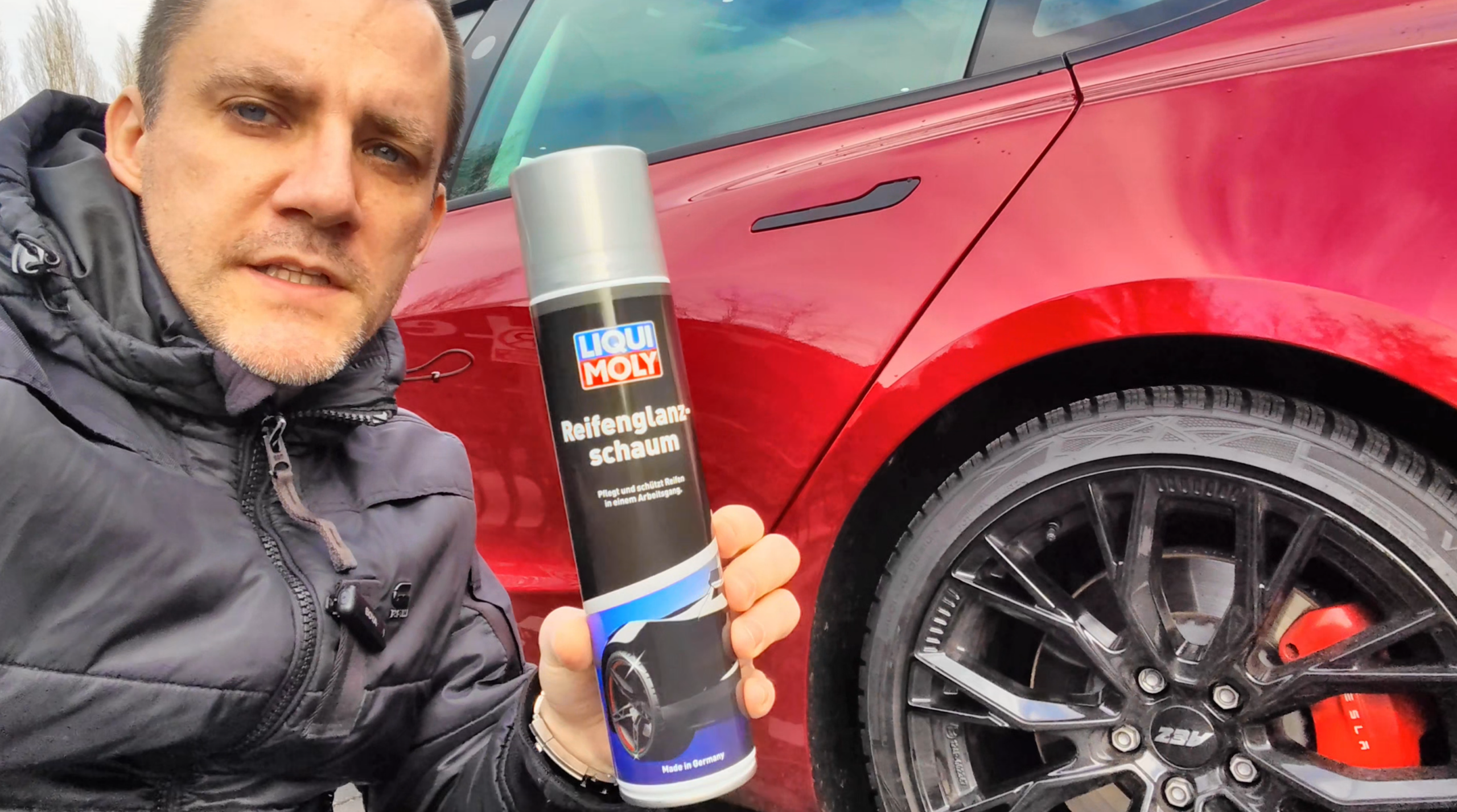
Liqui Moly Tire Foam test and review in winter driving
How does Liqui Moly Tire Foam (Reifen-Glanz-Schaum) hold up against real winter driving? In this video, I check back in on my Tesla winter tires two weeks after applying the foam to see if the finish actually lasts through snow, rain, and road salt. I’ve driven over 250 kilometers in typical winter conditions—slush, wet roads, and freezing temperatures. Usually, tire dressings disappear after a few days in these conditions, but the results from this Liqui Moly test were surprising!
Benefits of tire shine foam in the winter
While most people think of tire shine as a summer “vanity” product, using a tire shine foam in the winter is actually a smart maintenance move. Beyond just making your car look better in the gloomy weather, it provides a functional layer of defense against the harsh elements.
Here are the primary benefits of using tire shine foam during the winter months:
1. Protection Against Road Salt and Brine
Winter roads are covered in salt and chemical de-icers that are extremely corrosive. Tire foam creates a hydrophobic (water-repelling) barrier on the sidewall. This prevents salt-laden slush from sticking to the rubber and eating away at the tire’s natural protective waxes.
2. Prevents “Dry Rot” and Cracking
Cold air is naturally dry, which can strip the moisture from your tire’s rubber, leading to brittle sidewalls and “dry rot” (small cracks).
- Conditioning: Quality tire foams contain conditioners (emollients) that penetrate the rubber to keep it supple and flexible despite the freezing temperatures.
- Sealant Effect: It helps “lock in” the tire’s internal oils, which are essential for the tire’s structural integrity.
3. Easier Cleaning After Snowstorms
Because the foam leaves a slick, protective coating, dirt and road grime struggle to bond to the surface. When you go to wash your car after a snowstorm, the brown “sludge” usually found on tires will rinse off much more easily, often requiring less scrubbing.
4. Deep Cleaning in One Step
Unlike gels or sprays that require a perfectly clean tire first, foams are designed to be “spray-and-walk-away.”
- The bubbling action of the foam lifts light winter road film and dust off the rubber.
- As the foam dissolves, it carries the dirt down and leaves the protectant behind, which is perfect for a quick winter touch-up when it’s too cold for a full detailing session.
5. Combatting “Browning” (Blooming)
You might notice your tires turning a dull brown in the winter. This is called blooming, and it happens when the antiozonants in the rubber move to the surface to protect it from the air. Tire foam cleans this brown oxidation and restores that deep black “new tire” look, making your car look well-maintained even in the slush.
Feedback
Do you use tire dressing products in the winter or you think it doesn’t make sense to take them out until the summer? Check out the original Liqui Moly Tire Foam review here. Let me know in the comments.